Gary Millichip has developed a game that could help turn South Africa’s maths crisis around.
Story and pictures Stephen Smith
We all know that South Africa’s education system is battling. You just need to read reports of the pass rates, the challenges facing schools and educators, and the conditions that some learners battle in order to get an education. But what is particularly startling is how our maths and science marks are sliding year on year.
It’s this problem that has Gary Millichip so worried, and which got him looking for some way that he could help. A chartered accountant by profession, Gary obviously has an affinity and background in numbers and maths, and so the dire state of the annual maths results are of particular concern to him.
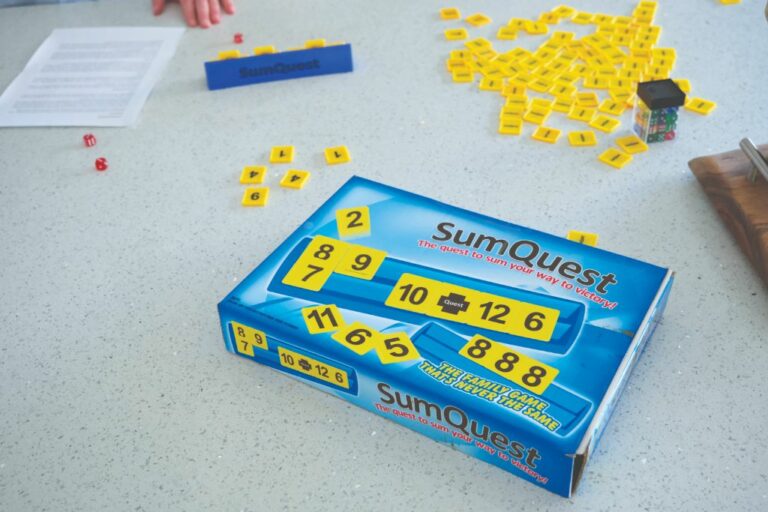
“There was a period when we were home-schooling our daughter, and I was trying to find a way of making addition fun. I played around with number tiles and different scenarios and came up with the idea for the game. I actually went as far as having a demo game made in China,” says Gary.
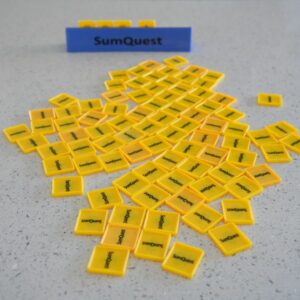
The game that Gary is talking about is SumQuest, and it started out as a physical board game. His demo game, though, remained just that due to the cost of having the games made. “The game itself isn’t too expensive to make, but you need to have a minimum of 5 000 made at a time, and that adds up in terms of cost – especially once you’ve taken the exchange rate and delivery into account,” Gary explains.
That first game was made over five years ago, and after that not much happened. But every year when the maths results were posted, Gary was reminded that something needs to be done. His next big step took place in 2020 when he had a SumQuest app developed, with the help of local company EpicDev. The app uses the board game as its inspiration, but obviously, things were changed to translate well into the digital realm.
“The app has been a great success, I think. It has been downloaded over 5 000 times already, from across the world, and has received excellent reviews both from downloaders and from experts in the education field, like Educational App Store (5 stars) and App Ed Review (8.2/10),” says Gary.
The app is available for download for both Android and Apple devices, from the Google Play Store and the Apple App Store respectively, for free. While in-app purchases can be made, they are not necessary to play the game.
At the moment the app is single-player only, but Gary has plans for multiplayer and online versions as well as other game modes. There are different difficulty settings already, catering for players of different strengths.
And Gary still has great hopes for his physical board game. “In South Africa, there are so many people who could benefit from this game, but who don’t have access to the app. A lot of schools, learners and teachers don’t have access to the internet or have limited data. Another problem is that many smartphones don’t have the storage capacity to download apps. My hope is to find a partner who is able to help me get the game made and distributed where it is needed,” says Gary.
While Gary speaks mostly of teachers and students and their matric maths marks, SumQuest actually has a far wider potential audience. “Studies have shown that mental arithmetic, doing puzzles and even playing computer games can have a beneficial effect on cognitive functioning in older adults. According to Stem.org.uk, playing mathematical games encourages strategic thinking, problem-solving and also develops fluency,” says Gary. So it looks like we could all use a bit of SumQuest in our lives!
FOR MORE INFO: Gary is looking for ways to develop the physical board game. If you or your company would like to get involved, get in touch via gary@happytum.com.