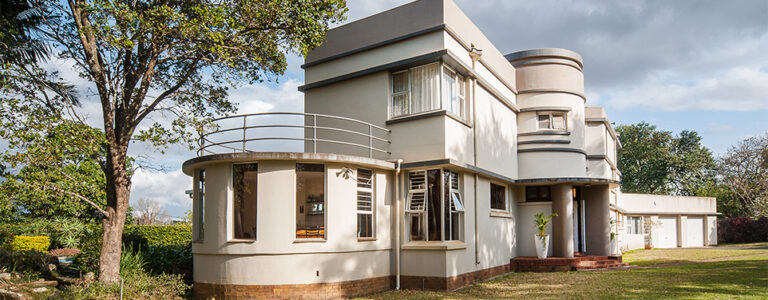
Heyfields at 59 Old Main Road, Kloof is a fascinating example of Art Deco architecture, commissioned by a local ship’s captain and maintained by a family who has loved it for almost three decades
Story Hayley Dennyson
Pictures Adi Weerheim
Durban has a rich Art Deco heritage, with a unique spin that reflects interests and attitudes of the time, and makes it all the more appealing to enthusiasts around the world. Originating in France in the early 20th century, Art Deco gained greater popularity after World War I, with rapid progress in technology and a desire to celebrate life.
For anyone who has spent time in our balmy East Coast city, the architectural style will be familiar – precise and boldly delineated geometric shapes, curved lines and, often, strong colours. Some of the best examples include Surrey Mansions on Currie Road, a number of buildings on Dr Yusuf Dadoo Street (previously Grey Street), Jubilee Court on Clarence Road, Cheviot Court on Musgrave Road, and Enterprise Building on Samora Machel Street.
The style is being kept alive by passionate collectors around the world. This offers another facet to tourism in Durban, especially if more of the 100 Art Deco property owners could be convinced to adopt the Miami colour palette, which only emerged in the 1950s, but further highlights the architectural style.
Art Deco combined modernist philosophy with fine craftsmanship and rich materials, something that was made possible in South Africa by the spread of the railway and wealth, predominantly from gold mining. It’s for this reason that Springs in Gauteng is said to have one of the largest repositories of residential Art Deco properties in the world. The port also played a significant role in bringing the style to Durban.
In 1935, some 30km from the coast, a man called Captain Andrew Drummond Hey commissioned architect Godfrey Le Sueur to build a home in the Art Deco style to resemble a ship. “It must have been an outstandingly different element on the architectural landscape of Kloof and would have taken quite a character to commission such an unusual home for the time,” says Donald Davies, Chairperson of the Durban Art Deco Society.
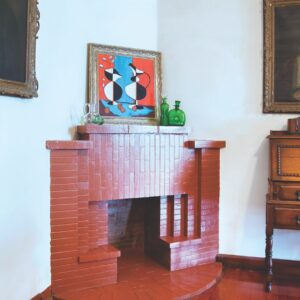
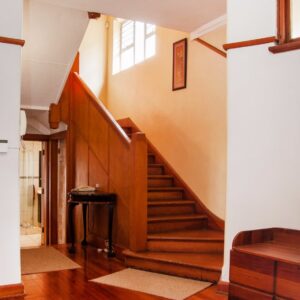
Remarkable features of the property include the “funnel”, “ship foredeck” and, inside, two distinctive fireplaces.
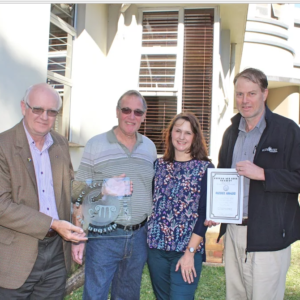
In 2016, the Durban Art Deco Society recognised the property’s current owners (Jane and Allan Wilks) for their contribution to maintaining our city’s architectural heritage, the first time a residential property has been credited in this way.
“When we bought the house 28 years ago, it was a wreck, but we loved it and it was all we could afford,” Jane recalls. “The roof and pool were leaking, walls were falling down, and the bank wouldn’t give us a bond until we secured parts of the structure. We made those repairs with the savings we had, starting our journey with this incredible property.
“We wanted a project and researched Art Deco style to ensure that the period features were retained. Soon after we moved in, I phoned the architect’s wife to find out more about the property. She told us that the corrugated iron roof was chosen to remind Captain Hey of his time at sea and that it was originally painted battleship grey and blue. Initially, the home had electricity, but no water, so water was collected in a tank in the funnel at the front of the house. This was then heated by fire before being piped around the house. At the time, it would have been the only double storey in Kloof, aside from the Fields Hotel.
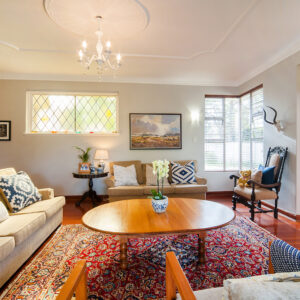
“Over the years, we have also bought furniture and accessories to suit the style. The roof was the biggest project, but there always seems to be something to do.
“When we moved in, there was no security on the property, but a lot has changed over the years and we have had to make allowances for that.” Another concession to modernity is the aluminium window frames, which replaced the original wooden ones.
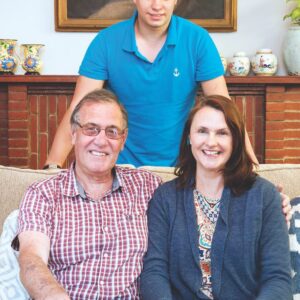
The couple raised their four children in the home and, today, live there with their youngest son, Chris, who is studying architecture at DUT. (It’s interesting to consider what influence this home may have had on that decision.)
Their family history sits beautifully in this character-filled home, with Wilks family portraits dating from today right back to the 1700s. The Wilks were originally from Faversham in Kent and, during the 19th century, owned a gunpowder factory and, later, a gin still near London.
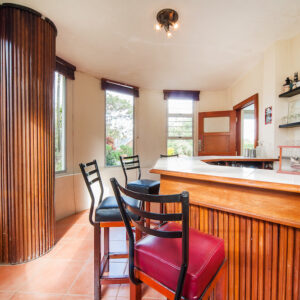
“Some of my favourite features include the stained glass window, which is actually more Tudor than Art Deco, the front bar room, with its beautiful wooden details, and the fireplace in the dining-room,” Jane continues. What makes the fireplace special is the Aztec/Egyptian theme reflected in its stepped brickwork.
Donald explains its significance: “In the 1920s, a number of old civilisations were discovered, prompting the inclusion of elements from Egyptology, the Aztecs and Native American totem poles and feathers in Art Deco design. The fireplace at Heyfields is a fascinating example and may give clues to the original owner’s interests.”
Whether you are an architecture aficionado or not, this home holds a special place in the story of our community and it is wonderful to see it being maintained.
The Durban Art Deco Society started in 1999 and hosts a number of tours and other events throughout the year, with attendance by representatives from AMAFA and heritage authorities. The Society has a room at Surrey Mansions where archival information and a collection of Art Deco books are kept. This is open to members and interested persons at specific times.
Carol 084 997 721; allandurban@mweb.co.za