
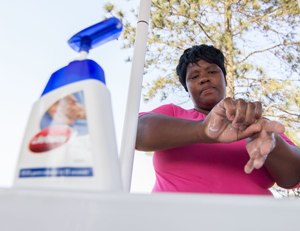
15 October is Global Handwashing Day and Lifebuoy are doing everything they can to increase awareness about the benefits of developing a healthy handwashing routine.
According to the World Health Organisation (WHO), diarrhoeal disease is the second leading cause of death in children under the age of five and is the main cause of death for around 760 000 children every year. Evidence suggests that hand washing with soap can help reduce diarrhoea by 45%.
In light of this, hygiene soap Lifebuoy launched a global campaign in Thesgora in 2012 to partner with at risk rural or peri-urban communities around the world and implement potentially lifesaving handwashing solutions. Lifebuoy’s Help a Child Reach 5 global campaign has since become the world’s largest hygiene promotion programme to date.
This year, Lifebuoy South Africa has identified the community of Mandeni, located in the iLembe District of KwaZulu-Natal, to partner with and raise awareness of their important mission.
From September 2014, Lifebuoy will spend time in Mandeni over a 21-day period in order to implement their hand hygiene workshops at the 35 schools as well as the eight clinics located in and around the area. The clinics will focus on a Neonatal care agenda as newborns are most at risk of succumbing to infectious diseases. The Lifebuoy Mandeni initiative aims to reach an average of 30 000 school children in the area and is also expected to target approximately 400 new and expecting mothers.
The Lifebuoy initiative is focused on two core pillars: changing the behaviour of schoolchildren and their parents via an interactive schools solution as well as affecting the behavior of new mothers and health care workers via the neonatal programme.

The programme illustrates the importance and benefits of adopting regular hand washing as well as practically demonstrating the correct method of handwashing with soap and running water to eradicate germ-carrying bacteria. As peri-urban communities often have challenges with regard to the accessibility of running water, the programme also teaches participants how to improve their access to hand washing facilities by creating running water using a container.
According to William van der Westhuizen, Lifebuoy Brand Manager, “Working with an extensive network of partners, including local health departments, Lifebuoy aims to make a difference in people’s day-to-day lives. Our challenge is to transform hand washing with soap from an abstract good idea into an automatic behavioural pattern at critical times of the day, especially the five key occasions before preparing and eating breakfast, lunch and dinner, after using the bathroom and whenever in the bath or shower.”
Since 2012 Lifebuoy’s (School of 5) school programme alone has reached 2.2 million South Africans. The objective for 2014 is to reach and help change the hygiene habits of an additional 2.8 million South Africans via the schools programme on a national level.
This pledge also taps into Lifebuoy’s global commitment to make a difference in the lives of ordinary people by creating accessible hygiene products (soap) and promoting healthy hygiene routines, within predominantly high risk communities, to change the handwashing behaviour of 1 billion people around the world by 2015.
For more information, visit the Lifebuoy website and Facebook page.