

How top ophthalmologists teamed up to make Umhlanga an epicentre for inspirational eye surgery.
It took many years from conception but a group of skilled ophthalmologists – some of the best in the country – has made Umhlanga a centre of excellence for eye care and surgery. Central to their thinking was the creation of what has become KZN’s first dedicated state of the art ophthalmology surgical day hospital.
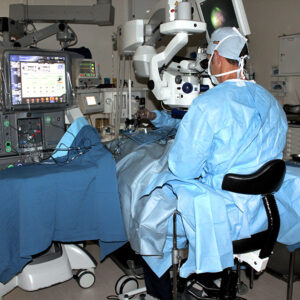
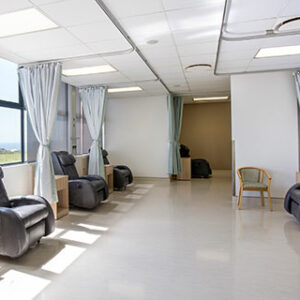
Known as the Umhlanga Eye Institute, it is a three theatre, 21-bed day hospital with world-class facilities offering a full range of eye surgery, using cutting-edge technology.
“Our vision was to create a centre of excellence that provided for as many of the eye care needs of our patients as we can provide,” says Dr Matt Young, immediate past president of the Ophthalmological Society of SA. Dr Young has been on the society’s executive committee for the last dozen years, is Secretary of the SA College of Eye Care and Surgery and teaches at Inkosi Albert Luthuli Hospital.
Umhlanga Eye Institute was conceived as an idea many years ago but securing a licence and developing a working model for North Durban took some planning. The main consideration is that the needs for eye surgery are often very different to other specialities.
“The staff in our unit are highly skilled and it has been a wonderful journey to work so closely with them all as we grew together, says Dr Young.
Patients who need surgery can almost always just come for the day. Surgery can often be done with local anaesthetic, and even if a general anaesthetic is required, they can still go home a few hours after surgery.
“This day hospital model has been very beneficial for allowing us to safely continue surgery for much of the COVID pandemic, as we are a stand-alone eye hospital that does not admit anyone overnight and does not nurse any COVID patients. We have developed a comprehensive protocol to keep our patients and our staff as safe as we can.
“This is not as easy as it sounds,” says Dr Young. “We have electronic screening apps, pre-admission COVID testing, enhanced nursing that ‘distances’ patients from each other, controls arrival and pick-up times and how patients are managed whilst in the theatre complex. We don’t even let doctors have tea together anymore!”
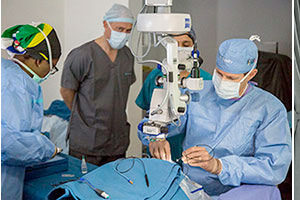
The core team of visionary doctors has now grown to 11 qualified surgeons that all operate from the Umhlanga Eye Institute, but all retaining their rooms in various parts of Durban.
The specialists treat macula degeneration and diabetic eye disease extensively, mostly from the consulting rooms. The removal of cataracts requires surgery.
After cataract surgery, the most common surgery performed at UEI is retinal surgery (which is what Dr Young’s practice specializes in treating.) The commonest conditions here would be retinal detachment, macula hole surgery, removal of epiretinal membranes and repair of advanced diabetic eye disease.
The interest in diabetic eye screening is an important public health discussion, especially with the prevalence of diabetes increasing dramatically each year. All diabetics (whether type 1 or type 2) should have regular screening visits with an ophthalmologist. Diabetes affects blood vessels throughout the body.
“We know that many diabetics don’t have symptoms and hence are tempted to think that they do not have organ-specific complications of the disease,” says Dr Young.
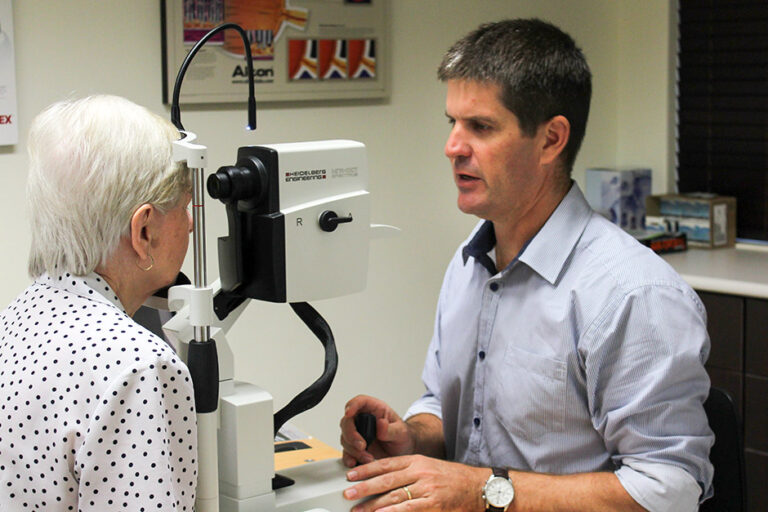
“By examining the eye an ophthalmologist looks through the pupil at the retina (the nerve layer at the back of the eye and most importantly its blood vessels). The retina is the only place in the body that one can directly examine the blood vessels without special scans.
“This is very valuable as by looking for blood vessel changes, we can guide the diabetic doctors about how diabetes is affecting the body.
”We now know that by detecting blood vessel changes in the retinal blood vessels (so-called ‘retinopathy’) the risks of heart attack, stroke and kidney disease from diabetes double.“
“We have therefore shifted the emphasis from ‘screen for sight’ to ‘screen for life’…by improving control, we are saving lives!
The Ophthalmological Society of South Africa is working with a number of medical aid companies to increase screening by training screeners, using retinal cameras and even increasingly by using Artificial Intelligence (AI) programs.