
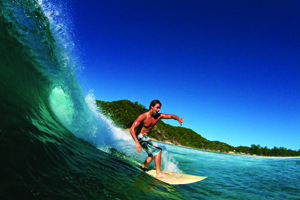
Mo-zam-bique. The word rolls off your tongue like a tropical breeze, spiked with a shot of rum. Smooth and delicious. Tantalising.
By now you’re thinking palm-fringed sands and turquoise water. You’re not wrong: Mozambique’s world-class diving and endless beaches have long been famous with adventurous beachgoers, even before the extended civil war shut down the country’s borders. But the war is long over and now, more and more surfers are finding their way to South Africa’s northeast neighbour, looking for the perfect wave.
It starts in Ponta do Ouro, the proverbial “Point of Gold” on the southern border. Renowned for diving and whale sharks, Ponto occasionally also serves up excellent right-handers.
The emphasis here is on “occasionally” – the large headland which creates the idyllic bay blocks out all but the most determined swells, and has left many surfers scratching their feet in the sand for days on end. Invariably they end up at Fernando’s, a local institution renowned for its R&R’s – an infamous combination of rum and raspberry cordial served up in a beer mug. It helps pass the time, apparently.
Further up the coast lies Inhaca, a sandy island anchored off the capital of Maputo.
Inhaca is sliced up by a series of mangroves and estuaries on the leeward side and home to a daunting but world-class reef on the windward side. It’s rumoured that a crazy South African first set up camp here while the war was still raging, riding the waves alone for years. Which is how you will probably surf it if you find yourself here.
If there aren’t any waves, the fishing is excellent but beware of the appropriately named “Hells Gate” – a thin channel barely 20m across that separates Inhaca from the southern mainland. Water rushes through at a furious pace as the whole Bay of Maputo drains through the tiny channel.
Inhambane lies about 500km north of the capital and used to be a focal point on the East Africa spice route. Nowadays, it’s become a focal point for surfing in Mozambique, thanks to nearby Tofino.
This coastal town holds an assortment of waves for all skill levels and has the blissful advantage of being far enough north to avoid the plagues of quad bikes and jet skis that invade the southern areas over peak season.
With the endless beach towards Barra littered with rustic beach bars and traditional dhows plying the shallows, it’s not hard to see why most visitors get hooked on this little slice of paradise.
But this is just the tip of the coconut tree. Mozambique has more than 2000km of coastline that connects South Africa with the tropical doldrums of Tanzania. Your own perfect wave is waiting out there somewhere. *
MAKE THE MOST OF MOZ
ü South African’s don’t need a visa, simply get your passport stamped at the border along with an entry fee (about R70).
ü If you’re taking a vehicle, get all the necessary papers beforehand including registration and proof of ownership. You will need to buy Mozambican road/car insurance at the border. 4×4’s recommended.
ü It may seem dilapidated around the edges, but the grand old capital of Maputo is home to stunning architecture, the original LM prawns, and a humming party scene at night. Definitely worth a stopover.
ü Accommodation ranges between anything from a hut on the beach to high-end 5-star luxury, or a 5-star hut on the beach. Choose accordingly.
ü Mozambique is amazing, malaria isn’t. The country is one of the hardest-hit malarial regions in Africa. Make sure you check with your doctor or travel clinic what anti-malarial precautions you need to take.