
Paddlers preparing for The Unlimited Dusi 2013 which begins on 14 February in Pietermaritzburg have been encouraged by the positive news of water quality emerging from the weekly testing of the uMsundusi and uMngeni rivers, while medical experts have urged them to be prepared for any eventuality to ensure their race is happy and healthy one.
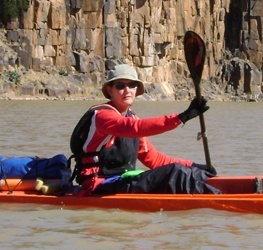
In the photo: Dr Claudine Lee has given paddlers taking part in The Unlimited Dusi four simple tips to minimise the risk of an upset stomach (see below)
Story: Gameplan Media
Dave Still, chairman of the Dusi Umgeni Conservation Trust (DUCT) and a Dusi paddler himself says more recent test results have been encouraging and a marked improvement on the last quarter of 2012.
“Our guys have been working pretty hard looking for problems and the municipality is coming to the party, fixing a few things,” Still said. “With not having as much rain recently, things are picking up.”

Still warned that conditions can change rapidly, saying: “All we can do is get it in the best condition we can, as far as humanly possible. If nature then intervenes and there is a huge storm, there is nothing we can do about that. What we can do is sort out all the known problems.”
Since 2010 the marked improvement in water quality for the race, and the drop in cases requiring medical attention can be attributed to the bold decision to move the race into mid-February when the risk of heavy storms is less, and the race’s efforts to provide on-going hydration with their partner 100 Plus. In the past two years, the race medics have not had to treat a single case of dehydration.
Dr Claudine Lee and sport dietician Kerryn Moolenschot have urged paddlers to be vigilant and take basic precautions before, during and after a day on the river. While the scourge of “Dusi Guts” has been largely alleviated, Dr. Lee urges paddlers to plan for any eventuality:
• Make sure that your drinking system does not dangle in the water, and always spit out your first small sip of juice.
• Close your mouth when approaching a stopper wave.
• Loading up on ‘good’ bacteria or probiotics can combat diarrhoea. You can buy capsules from most pharmacies or some supermarkets. Yoghurts containing live bacterial cultures can also up your probiotic intake.
• Wash your hands before eating your post- race meal
So what should you do if you find yourself victim of an unsettled stomach? Dietician Moolenschot recommends the following:
• The first line of treatment is oral rehydration solution (ORS). ORS is mixture of fluid and electrolytes to replace what has been lost by the body. There are commercial rehydration powders that are available at most pharmacies and supermarkets. Dr Lee recommends putting a sachet of Rehydrate into your race juice regardless of whether you are suffering from Dusi guts in order to keep fluid in your system.
• Keep hydrated. Aim for the upper recommendation of 350ml fluid every 15 to 20 minutes if you are trying to do day 2 or day 3 of the Dusi with Dusi guts. Fluids can include water, isotonic energy drinks, juices or non-caffeinated soft drinks. You are not taking enough fluids if you are showing signs of dehydration such as sunken eyes, lethargy and poor skin turgor (your skin takes a longer time to return to normal after once you pinched it).
• Continue taking probiotics.
• Dr Lee recommends Smecta sachets three times a day for each day of the Dusi, as a prevention as well as a treatment.
• If in doubt rather go and get a drip. A quick drip will mean a much quicker recovery in terms of getting back to training for other races.
“If you follow these simple steps, you will drastically reduce your chances of being affected by Dusi Guts as well as your recovery time if you are,” says Dr Lee. “But as always, if you are sick, seek medical advice before getting on the water, and most importantly – listen to your body.”
The Unlimited Dusi starts on 14 February at Camps Drift, and the race ends at Blue Lagoon in Durban on 16 February 2013.