
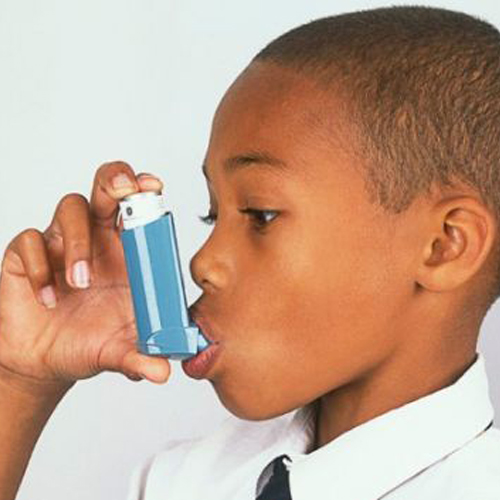
Asthma is one of the most common chronic illnesses in children. It occurs when small air passages in the lungs easily get inflamed and overreact to allergens and respiratory viral infections that result in narrowing of the airways (bronchoconstriction). This obstructs airflow and leads to the following symptoms:
• Intermittent dry cough that can wake children at night • Expiratory wheezes (a whistling sound when exhaling) • Shortness of breath and chest tightness
• Less physical activity than usual • Death
If you suffer from asthma, skin allergies or hay fever or expose your child to pollutants (especially cigarette smoke) your children are at risk of developing asthma.
Asthma is classified as intermittent or persistent and as mild, moderate, or severe based on:
• Frequency of night time awakenings in one month • Frequency of quick-relief medication use in one week or in one day • Whether a child’s symptoms interfere with normal activity • Frequency of asthma attacks that have required systemic corticosteroids • Lung function test results
Treatment for asthma includes:
• Quick-relief medications that treat sudden “asthma attacks” • Long-term controller medications used daily to control asthma symptoms (inhaled corticosteroids) • Lung anti-inflammatory chewables or sprinkles • Nasal sprays and antihistamines for allergic rhinitis
Many sport stars have asthma – it can be controlled! Asthma that is left undiagnosed leads to a child being on antibiotics unnecessarily and not reaching his/her full potential on the sports field. Asthma also leads to a tired child in the classroom due to a lack of sleep and poor oxygen supply to the brain and body.
If your child has symptoms of asthma, visit your GP.
By Dr Deseré Ferreira