There is light at the end of the tunnel in the first phase of the Go!Durban project from Pinetown to Bridge City.
Story by Brian Downie
At a recent presentation to the Western Area Business Forum, Carlos Esteves – Head of Infrastructure Rollout for the GO!Durban project – briefed the business community on progress on the Integrated Regional Public Transport Network (IRPTN) and the expected delivery dates. Pinetown has been the centre of major activity over the last year as roads have been dug up and widened; services relocated; and the new bus lanes installed.
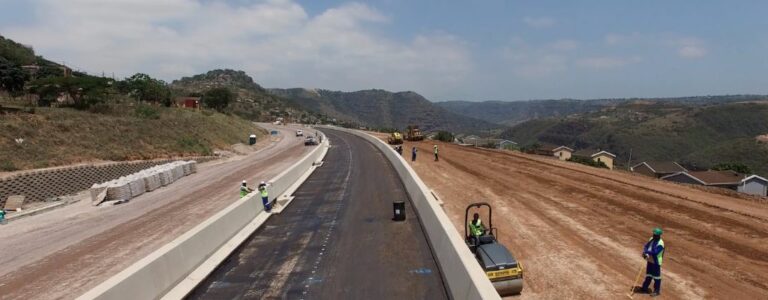
The good news is that in most areas the majority of the work is now complete, and once the outstanding service relocations have been done, all that will be needed is the final surfacing to transform the area into virtually the final product. The Crompton, Glenugie to Anderson section has been delayed by taxi rank relocations, but will soon be back on track.
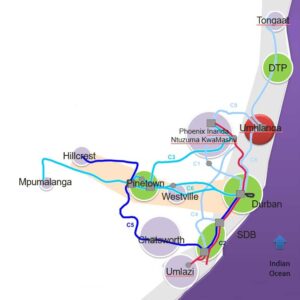
Pinetown is at the hub of three of the routes planned in the IRPTN project, with links to Hillcrest and Mpumulanga in the west, Chatsworth/Prospecton in the south, and Bridge City/Cornubia/uMhlanga in the north. The central Pinetown infrastructure for each of these routes is being installed in the present parcel of contracts, with Corridor C3 linking Pinetown to Bridge City being the first to be implemented.
A significant impact in easing traffic congestion will be the Josiah Gumede/St Johns Avenue intersection which will be converted to a single point intersection. This will significantly improve traffic flow by replacing the double traffic signals with a single set of signals, allowing traffic to flow directly through the intersection.
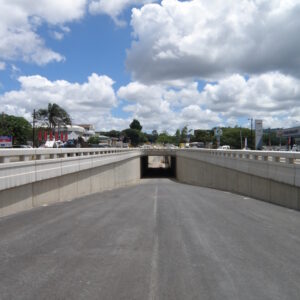
The restyled underpass will be for buses only, providing a consistent service to commuters – even in peak traffic. The height of the kerbing along all the municipal roads has been designed to allow buses to be extracted in the event of a breakdown, but will not allow cars or taxis to enter or exit the dedicated bus lanes. With regards to the impact on businesses, Esteves stated that it was the City’s intention to restore normality by September this year, thereafter work would continue in the median on completion works and the stations. Completion of the C3 corridor is expected by March 2017.
The stations are sophisticated, secure buildings with access by payment only, equipped with CCTV and security staff, and offering easy access for disabled people. In his vision for a sustainable transport network, Esteves sees the clustering of social facilities, employment opportunities and high density housing around each station. Parks and Recreation will be designing a safe, attractive precinct, with each station featuring wall art celebrating the culture and history of the area. Wayfinder systems will be in place for up to 400m around each station.
Boarding a bus will be a quick and efficient process, with 140 to 200 people being able to be loaded per minute. User security, comfort and convenience are significant priorities with end-to-end WiFi amongst other facilities.
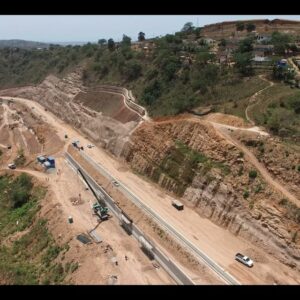
In collaboration with the KwaZulu-Natal Department of Transport, the eThekwini Transport Authority are installing the bus lanes concurrently with the construction of Main Road 577 through extremely difficult terrain from KwaDabeka across the uMngeni River. Passengers will have a Chapman’s Peak experience as an added bonus.
And the light at the end of the tunnel? eThekwini are negotiating donor funding from the Cities Greening Initiatives for LED street lighting for the project. A high tech/low cost addition to a groundbreaking project. *