A first-hand account of how technology and the care of a local community can enrich the lives of the disabled
Story Dianne Kerwan Photographs Gavin Foster
“Little girl, little girl, you can’t go in there. That’s the university!” The man who had followed me up the former Smith Street plaguing me with questions (Did my mommy know where I was? Could I read?) protested as I entered what was then UNISA’s regional office, next door to Durdoc Centre. A person who had a speech defect and wore orthopaedic footwear was obviously too brain damaged, in his opinion, to have any business on a university campus.
Born with cerebral palsy and an inability to physically write, I remain indebted to the special schooling system, which made it possible for me to type my schoolwork and, in the interests of time, dictate my exams. However, the lack of opportunities for integration with my able-bodied contemporaries gave rise to challenges after school, often more daunting than my disability.
Armed with a degree, I intended to prove myself and enjoy the freedom and independence of mainstream society. The advice that I become a translator was based purely on my aptitude for languages, without taking my speech defect or slow typing pace into account. When it became apparent that these factors could jeopardise my chances in this field, a developed interest in career counselling for the disabled had me branching into the field of psychology.
Alas, difficulties dictating statistics, a compulsory subject at honours level, put paid to my dreams in this regard. The closure of the employment agency, which I was helping to run on behalf of the Pietermaritzburg branch of the Natal Cerebral Palsy Association at this time, added to my despair.
Depression and despondency could have become the story of my life had God not intervened and exposed me to the excellent theological exposition of the Bible offered at Hillcrest Baptist Church. My constant striving to prove myself ceased when the implications of being created in God’s image and having been that precious and loved that Christ had died for my sins took root. I was slow in accepting God’s sovereignty – His right to order my life in the way He chose.
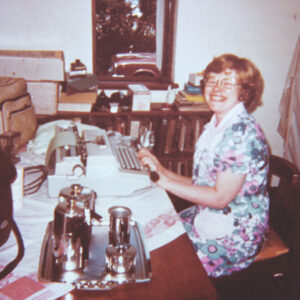
The writings of Joni Ereackson Tada and her battle to accept the verdict of total quadriplegia after a diving accident had a profound impact. When acceptance came, I finally made peace with this aspect of God’s divine being and was able to accept living off a disability grant in Queensburgh Cheshire Home. God was, however, gracious and fulfilled my quest for a mentally stimulating activity in the form of freelance journalism – an occupation I am able to practice from my room and which supplements my disability grant.
While God was gracious and made the above my fortunate lot, especially giving me an ex-pastor who encouraged me to take up writing, this is not the case with many handicapped persons who languish away on social grants, either in their own homes or other institutions.
Improved infrastructures and services, such as reliable disability-friendly transport systems, wheelchair access to buildings, adequate career guidance and changes in attitudes to handicapped persons, could see more handicapped persons in the workplace.
Advanced technology, such as emailing, made correspondence tutoring possible for me and deserves further exploration, making home employment possible for severely disabled persons.
Last year, I witnessed a well-known Durban actor succumb to diabetes after losing both his legs to the disease. I often wonder, had the necessary supportive structures been available to help this individual return to the stage or find another lucrative career, if he’d still be here today.
Make handicapped persons part of your community and witness them flourish to new heights.