
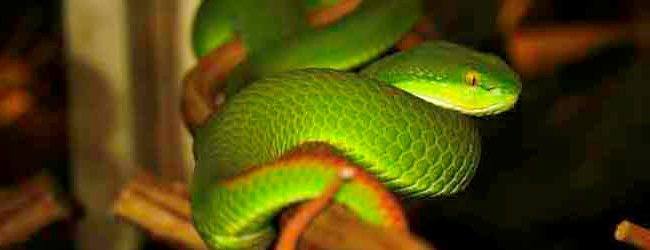
We seem to have had a fair slither of venomous visitors this year, several of them coming a little too close for comfort.
Mount Edgecombe resident Grant Adams made national headlines when a Mozambique Spitting Cobra reared up through a shower drain and bit him while on holiday at a bush lodge in Zululand. Fortunately he received medical treatment in time to prevent any long term damage. Further North, in Empangeni, a 9-month-old baby survived a painful bite (again a Mozambique Spitting Cobra). And some of the hospitals have reported more cases of snake bites than usual.
Closer to home a 2,5m Black Mamba was found in a complex in Somerset Park; by the complex’s gardener who had “herded” it into a bush. Scary stuff, though snake experts will tell you that in terms of accidents, fatal snake bites are very much at the bottom of the scale compared to other incidents such as road accidents. It’s believed that in South Africa there are about 15 (known) fatalities a year from snake bites.

Nevertheless it pays to be “snake savvy” and to find out more we visited Jason Arnold, snake expert at Dangerous Creatures in uShaka Marine World, a fascinating exhibit of venomous snakes, other species of reptiles, amphibians, scorpions and spiders.
While there are about 170 species of snakes in Southern Africa only about 10% can inflict a life threatening bite. Mozambique Spitting Cobras are the most common highly venomous snakes in KZN (and responsible for the majority of serious bites.)
Urban encroachment has forced snakes to move away from their habitat into the suburbs. Occasionally snakes “hitchhike” which may have been the case involving the Black Mamba found in Somerset Park. “Black Mambas do not naturally inhabit this area,” says Jason who was called out to remove the snake, “so it’s possible it was transported in an unsuspecting motorist’s vehicle.”
Discouraging reptile visitors
Most snakes are very timid and will not attack unless cornered or provoked in any way.
They prefer long grass, cluttered garages, disused Wendy houses and sheds, compost heaps, overgrown drainpipes and gutters. Keeping your garden and outbuildings tidy and uncluttered will help discourage these visitors. Washing floors with a solution of Jeyes Fluid is an effective non-toxic repellent.
“One of the snake’s ‘favourite’ spots is a pool pump as the running motor keeps it warm. “When opening the cover, lift it toward you, giving the snake a chance to escape from the other side,” advises Jason.
“We shouldn’t kill snakes. They’re important members of our eco-system, the majority being harmless. There is no reason why they should be hated or even feared.”

What to do when a snake comes to visit
Trying to catch or kill a snake is not recommended.
“Rather call in a snake handler,” advises Jason. “Most bites are a result of people trying to catch or kill snakes. If one is in your house and your doors are open it may go back outside. Or you can shut the door to contain the snake. Close off any gaps underneath the door and windows and observe it from an outside window until help arrives.”
If bitten
There are three types of snake venom: Cytotoxic (all the Spitting Cobras and Adders), Neurotoxic (Mambas and Non-Spitting Cobras), and Haemotoxic (Boomslangs and Vine Snakes)
While it helps to identify the snake, this isn’t vital as doctors are quite quickly able to establish the type of venom by the symptoms the patient is displaying.
• Try to keep the patient calm.
• Phone ahead to the nearest hospital so they can prepare for the patient (they may have to order anti-venom) before your arrival.
• Elevate the affected limb and wrap the entire limb in a pressure bandage (crepe bandage if available) as tightly as you would for a sprain. This puts pressure on the lymphatic system and slows down the absorption of the venom.
Tourniquets are completely outdated and now considered dangerous, (as is the practice of cutting the wound and sucking out the venom!) “A tourniquet can make the situation much worse as it restricts the blood flow, killing the cells due to lack of oxygen,” advises Jason. “I’ve heard of a case where a person who was bitten by a completely harmless snake lost a limb because a well meaning friend applied a tourniquet cutting of his blood circulation.”

Anti-venom should only be given by qualified people in hospital conditions. While it does save lives, incorrect administration of anti-venom can kill a person, particularly if they have been sensitised by having previously received anti-venom.
Story by Lee Currie
______________________________________
For snake removals or further info contact Jason Arnold: 082 745 6375 or universalreptiles@gmail.com
1 Comment
Hi Jason. I live in the Hillcrest area(west riding) on Thursday about 11.30am my Gardner called me as he saw a Black Mamba in the bottom of our property. We have an acre property which is next to a bush area. I went to see for myself as I wasn’t sure if it really was a Black Mamba. Our garden was landscaped 7 years ago and we have a lot of indigenous plants and quite a lot of heavy thick vegetation as well as rocks in the garden. I’m not familiar with this snake at all, but after googling it I am quite scared that my Gardner will get bitten. I watched a video of Thea who handles a lot of these snakes in Swaziland . Now I’m petrified ! I couldn’t believe how they lift their bodies so far off the ground at strike at chest height. I also believe they normally remain in the same place.?! This snake in our garden is about 1 1/2 to 2 m long. Is there any chance that you can come out and remove it off my property or do you know who I should contact? What do you charge to come out if you do? I’m a pensioner, so I don’t mind paying but can’t afford to pay a lot of money. Many thanks if you can assist/help. Have a good day. Regards Theola Hirst