
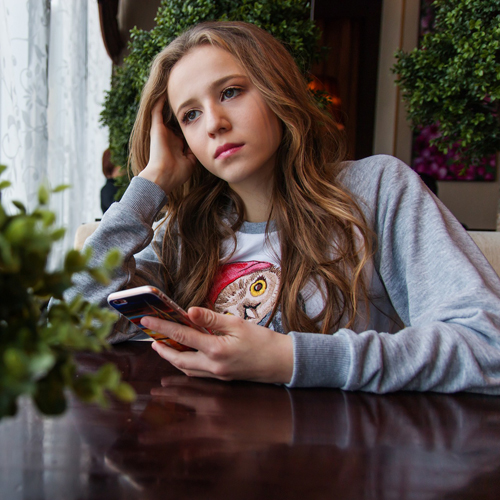
Lockdown can be a very difficult time for teens as they are in the process of trying to figure out who they are by seeking independence from the family and by trying out different behaviours and attitudes, which they might later adopt or discard. This experimentation often occurs within their peer group where they receive acceptance, validation and a sense of belonging. While the family still plays a very important role in teens’ lives, it is the peer group which becomes the mirror in which they can see themselves. Being cut off from one’s peer group, particularly with uncertainty about how long this will last for, can leave some teens feeling isolated, frustrated and despondent. If you notice that your teen is battling, here are a few tips to help them cope:
Name feelings
If teens can identity what emotions they are feeling, they will have a better chance of working out what is causing them. Teens might need you to assist them in doing this:
- Ask your teen how he/she is coping and whether he/she is struggling with anything.
- If you get the usual answer of, “Fine,” gently point out the behaviours you have observed which have caused you to be concerned (e.g. low mood, irritability, negativity, withdrawal from the family, increased sleeping/difficulty sleeping, loss of pleasure in life) and ask your teen what might be causing them to feel this way.
- They might say something like they feel as though they “aren’t doing anything with their life”, they “need to get out,” they “need to see people their own age”.
- Empathise with your teen’s feelings and try to help them label whatever emotion it is that they are feeling (frustration, anger, sadness, loneliness, hopelessness). Getting them to assign a word to the feeling will help them to label the feeling when they experience it again. When we know what feeling we are dealing with, we can generate coping strategies.
Coping
Most teens have not yet developed a range of coping strategies so will probably need support in identifying what they can do to cope in the situation. The coping strategy they adopt will depend on the emotion they are experiencing and what works will vary from person to person. Teens need to try out a variety of coping strategies for emotions to discover what works best for them.
If your teen is feeling frustrated because they need to see people their own age and cannot because of the lockdown, you could help them explore coping strategies by trying the following things:
- Ask them what kind of things they miss most about life before lockdown. This might be something like wanting to “jol with mates” or “meet girls/boys”.
- Asking for these details helps your teen to explore and better understand why he/she is finding the situation so difficult.
- Some boys seem to struggle with being isolated at home more than girls, as girls’ ways of relating to their peer group involves manoeuvres for intimacy via sharing which is easily done over the phone or via WhatsApp and can be with a single friend. Boys tend to connect by posturing, “disses” (witty insults) and practical jokes within a group of friends which is not as easy to achieve remotely.
- Brainstorm together what might help the situation. Although your teen won’t physically be able to interact with friends, perhaps organising a WhatsApp video call a couple of times a week with a group of friends might help them feel more connected. Relaxing the rules (for now) and allowing more time for your teen to connect with friends via Skype, Zoom or interactive gaming might also be helpful for them.
- Depending on the emotion being experienced, teens might also benefit from listening to music, watching a movie, doing a deep relaxation exercise (available as free downloads), having a walk or doing something creative. Teens need to develop a toolbox of coping activities and strategies which they can dip into and choose from when experiencing different challenging emotions.
Cognitive strategies
How we think about a situation can also influence our coping. Below are some cognitive coping skills which we can help teens learn.
The first of these is their circle of control. Teens need to learn that they can only control themselves and their own reaction to situations. The behaviour of others, the date when they will be able to go back to school or when they can socialise again are all outside their circle of control. Identifying what they can control and what they have no power over can sometimes be a bit of a relief as they can stop wasting energy feeling negative and trying to change the situation or behaviour of others.
Identifying what they can control can lead to acceptance of a situation. Studies have shown that when people experience situations which they have no power to change, acceptance is a useful coping strategy and decreases feelings of hopelessness and depression.
Acceptance can also lead to identifying positive aspects of the situation and to being grateful for this. While your teen might prefer not to be in lockdown at home, they might be grateful that they have a family who loves them, good food, a warm bed, and that they can lie in on chilly Autumn mornings etc.
Research shows that we often need to compare our situation to others who are worse off in order to experience gratitude. Thus, discussing the experiences of those less fortunate with your teen might help him/her put his/her own experience into perspective.
Asking your teen to focus on things he/she is grateful for each day can help him/her to cope better. An experiment with university students showed that those who were asked to focus on experiences for which they were grateful, reported greater well-being than those who were asked to focus on stressors or to just record everyday events.
Reframing a situation is also a useful coping strategy. Instead of describing oneself as “stuck at home,” a teen might be asked to think of the lockdown as “safe at home.” Given that there is a lot we don’t know about this virus and that disturbing reports are emerging from other countries about young people without underlying conditions becoming very ill from the virus, this might help your teen view their situation differently.
It might be useful for teens to consider their lockdown experience from an altruistic perspective, thus their sacrifice of not going out can potentially save the life of a vulnerable person who might contract the virus.
Difficult situations call for flexibility and creativity. Although your teen cannot pursue his/her usual leisure activities, this might be an opportunity for growth and self-improvement in other, unfamiliar areas. Your teen might consider trying out a new activity or learning a new skill. This could be anything from taking free online tours of famous museums (https://www.travelandleisure.com/attractions/museums-galleries/museums-with-virtual-tours), learning a new language, going on virtual game drives (https://www.youtube.com/channel/UCV6HJBZD_hZcIX9JVJ3dCXQ), to researching fun tricks to teach the dog or to identify birds in the garden. Challenge your teen to try something new and to use this time productively.
If your teen’s symptoms do not improve with the above strategies or if you are concerned, please contact a mental health professional for specific advice and support.
Routine
In addition to the strategies mentioned, it is essential that your teen remains in a routine during the lockdown. A routine provides structure to the day and is the foundation into which all other activities can be fitted. Teens who do not have a routine can soon feel rudderless and purposeless, which will affect their motivation to do anything, including their ability to complete school tasks.
- Your teen should go to sleep at a regular time each night and should be woken at the same time each morning. Teens need to have eight to 10 hours of sleep a night.
- Practice good sleep hygiene (have your teen follow the same routine each night before they go to bed, remove screens from the bedroom and make sure that teens have at least 30 minutes screen-free time before going to sleep, limit caffeine generally (including in soft drinks) and avoid it at least four hours before bedtime).
- Your teen should also eat at regular times and follow a healthy diet.
- Build chores into your teen’s routine. Helping out with household chores (e.g. stacking the dishwasher, feeding the animals, cleaning the pool, mowing the lawn or even occasionally making dinner) can help your teen feel productive and useful. Having chores also makes leisure time feel more valuable.
Exercise
Exercise is a crucial part of your teen’s coping as it provides an opportunity for teens to shake off daily stresses and to experience a sense of achievement which can boost self-esteem. Many teens find that exercise is the pivot around which their lives are organised.
- Regular exercise has been shown to improve mood, increase energy levels and to improve sleep quality.
- Exercise requires self-discipline and perseverance which are life skills that can be transferred into other areas of life.
- Your teen needs an average of an hour of exercise per day over a week period (this includes walking, skateboarding, cycling, rollerblading, dancing etc)
- Encourage your teen to search for exercise routines which suit his/her interests; there are many free downloadable aerobic, dance and body weight work-outs available online.
Lockdown can be a time of personal growth and self-discovery for teens. If, with your support, they can learn new coping skills and can find a purpose, they can emerge from it with increased self-reliance, self-esteem and confidence which will bolster them in their identity formation.
Wendy Corfe is a counselling psychologist in private practice in Hilton, KZN. She has three children of her own and lives on a farm in the Dargle. She loves working with families in order to assist them in achieving optimal functioning and particularly enjoys doing play therapy with children to help them process and heal from the life challenges they may encounter.