
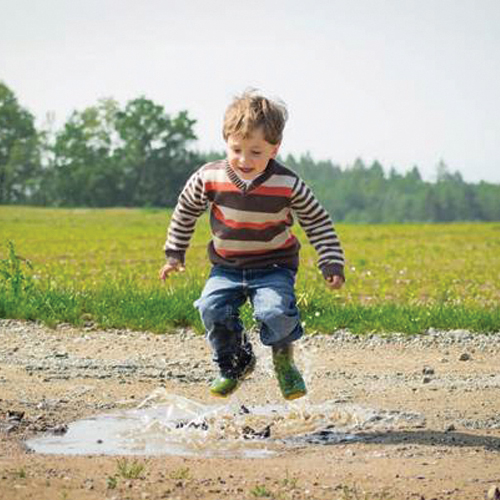
In our ever-changing world, academic success appears to be the most important part of a child’s development. With increased pressure on children, the focus is being taken away from free and meaningful play and placed more on achieving academic goals. Although parents may think that they are doing what is best for their child’s academic development, research has shown that it is in fact through play that children develop the most important skills that they take with them through life.
The preschool years are when children need to experience a range of sensory experiences on a daily basis. The outdoors is an environment where their senses are fully awakened and the variety of activities and whole body experiences are optimised in this environment to develop the child as a whole.
Play is the basis for igniting the love of learning. It is through play that children learn important life skills. These include:
• Social skills like sharing, turn taking and negotiating
• Motor skills, such as running, jumping, climbing and balancing
• Developing self-esteem through perseverance and achieving goals
• Creative thinking and problem solving skills
• Independence
These should all be achieved through whole body, natural, unstructured movement and meaningful sensory play. If children are denied these opportunities there is greater risk for them to experience difficulties in their later academic years. These difficulties may present themselves as poor concentration, emotional immaturity, poor problem solving and trouble socialising. Research has shown that there is an increase in sensory, motor and cognitive issues in later childhood and this has been linked to the decrease in free unstructured play in the pre-primary years.
Allow your child the freedom to get messy, to be creative and imaginative, and explore the world around them. This must be done in an unstructured child-led manner. Here are some ideas for exciting sensory play:
• Jump in muddy puddles
• Finger paint
• Play with boxes
• Make blanket tents
• Shaving cream fun
• Make a mud kitchen
• Create art – cutting, sticking, sprinkling glitter or sand
• Explore the garden
• Run, skip, hop and climb – encourage any movement
Do not do anything for your child that they can do for themselves. Allow your child to enjoy their childhood. They will learn far more skills than you can imagine, just by playing.
By Crawford Pre-Primary North Coast Teachers – May Campbell and Angela Fowlds.