
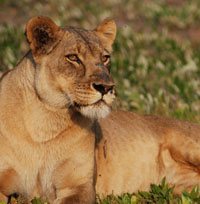
When it comes to snakes and lions, many people are curious but would rather reserve that curiosity to the imagination. But for Westville animal handler Chris Hofmeyer these animals are a part of his daily life. For the past 20 years, Chris has worked in some of the most dangerous environments in the country, studying and living with all kinds of creatures.
By Sihle Mthembu
“I initially got involved with animals after going hunting with my father as a young boy,” Chris says. “I was always curious about their bodies and movements, and would look at them with wonder.” But this wonder did not develop into a fully-fledged passion until Chris was at university, where he was studying psychology and – by chance – had to write an article on animal psychology.
“It was amazing to find out that these creatures have thinking processes and minds of their own,” he says, “and that is where I really got into it. I dropped out of psychology and started work with a vet.”

For the last 20 years, Chris has travelled to the most remote parts of South Africa, researching animal habits and studying their migration. He once went on a two month trek in the Karoo, tracking a puff adder.
“It was an interesting experience because it is a very dangerous snake, but being able to follow it for that long, you sort of gain a sensitivity towards it and how it adapts to survive.”
All those years studying reptiles and handling lions has not been without incident. Chris recalls one occasion when he was trying to examine a young lion that was injured and it tried to attack him. “Me and my friends were in van and we saw the lion laying there,” he says. “I tried to have a look at its injured leg and the lion swiped me right in the ribs with its paw!”
Although Chris escaped without major injury, he does admit that it helps to be careful around wildlife. “It’s always good to take precautions, especially if you have no formal training on how to deal with wild animals.”
In a bid to relay the skills that he has learnt, Chris holds regular workshops and training clinics at schools in and around Durban to help teach children about animals, as well as the importance of conserving nature. “It’s important for us to look after our environment,” he says, “and for us to teach our children to do the same, so that they can also have these animals long after we are gone.”