Story hayley dennyson
Each year, it seems, we talk about the growing pressure on children (and their parents) to expand their repertoire and to excel. While this undoubtedly motivates great achievements, it requires careful management to mitigate any negative side effects.
“Competition exists in the world and the school environment must provide for role playing opportunities that prepare pupils for life in the adult world,” says Shane Cuthbertson, Executive Principal at Thomas More College. “As such, we believe that healthy, structured competition is essential.”
At Thomas More College, as in many schools, “classroom activities are specifically structured to spur a commitment to self-improvement and to engender a sense of teamwork, communication and co-operation. These are all qualities that will lead to a better performance.”
“We are all in competition with the illusion of a perfect life, as portrayed in advertising campaigns and in social media,” says Jonathan Manley, Principal of St Mary’s DSG. “The idea of ‘never good enough’ is very real and can encourage competitive behaviour because young people want to know if they are ‘good enough’. Parents play a vital role in maintaining a balanced view on their children’s ability and should discourage comparisons, as this can lead to negative self-images being formed.”
Psychologist Simon Brittz expands on this idea. “Children are working under increased pressure and expectation, largely from the adults around them. Today, the average 12-year-old is expected to achieve academically what a 14-year-old may have done a generation ago, but, emotionally, the child still functions on a 12-year-old level. Achievement is intricately linked to self-esteem and self-confidence. Placing too much focus on results, rather than effort and enjoyment, is a slippery slope to eroded self-esteem.”
Simon sees children of all ages presenting with anxiety, overwhelmed by hectic schedules and the pressure placed on them. “These children are exhausted and need time to play, to unwind and be creative,” he continues. “Age isn’t necessarily an accurate indicator of how a child will cope in a competitive environment. We need to consider their individual character, their resilience.”
While parents play a vital role in managing their children’s schedules, school values are just as influential. “In competition, we expect our students to give of their best – we do not encourage them to win at all costs,” says Craig Girvin, Headmaster at Hillcrest High School. “We encourage students to develop an attitude of wanting to win. It is not so much about the winning (though winning is good) or losing, but about having given of your best. Our theme for 2016 is ‘Go For Gold’. Not everyone can come first, but everyone can aim to do their very best and achieve their best results in everything that they do.”
Roseway Waldorf takes a gentle approach to competition, emphasising the importance of community values. Wendy Pickering explains: “Competition has its place, but only when it is recognised that each person has his or her own areas of greater or lesser strength » relative to others. Likewise, in society, different skills and talents are required, and working together in the classroom forms the ability of that person to work with others later in the workplace. We regard healthy competition as the bettering of one’s skills or the skills of a team.”
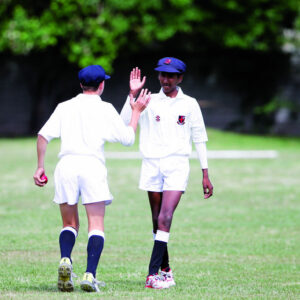
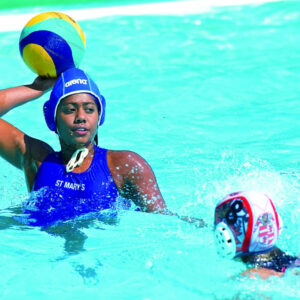
The sporting arena has always been a site of intense pressure and school sport is no exception, with Old Boys claiming bragging rights based on their school’s performance and parents sometimes using sports results to measure a school’s success. But at what age should this competitive spirit start?
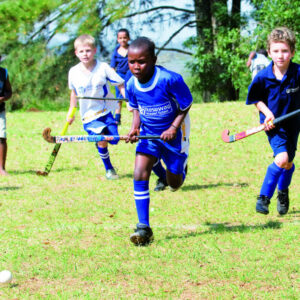
At Highbury Preparatory School, the focus is on participation, rather than results, in all spheres of school life, from academics to culture, with sport seen as a tool for learning commitment, discipline and good sportsmanship, as well as the establishment of an active lifestyle. “At Foundation Phase level, our boys don’t need specific skills – it’s all about fun and the love of the game,” says Andre de Beer, head of Foundation Phase sport. “After all, sport is there to balance out the academics. We aren’t coaching Springboks! »
In phys ed, we’ve brought back handstands and somersaults in addition to rule-based games. This builds upper body strength and has been shown to have benefits in the classroom too, as the boys develop co-ordination and spatial awareness.”
“It is a noticeable trend across many schools in South Africa that children are avoiding competitive team sports because of the pressure and criticism they are exposed to,” says Jan Nicklin, Director of Sport at St Mary’s DSG. “It is no surprise that many schools have introduced ‘lifestyle sports’, which are neither team nor competition based. Whatever we do in schools needs to honour the fact that these are children we are dealing with and they do not have the same set of psychological skills as adults. A balanced approach will serve our communities and educational programmes best.”
“Parents may become frustrated because they feel their son isn’t progressing fast enough, but sports development is a long-term plan, lead by the child,” says Andre de Beer. “We often see children who played in the C or D team in Grade 3 make the A team in Grade 7.” This highlights the need to develop ability through great coaching at all team levels.
International studies and experience drawn from the Australian academy system shows that as many as 75% of 13-year-olds drop their main sport, either due to burn-out or through a desire to try new things. Equally, research done by Rhodes University shows that the greatest physical development occurs between the ages of 15 and 18 years, making it possible to start a sport at 15 and go on to be an elite athlete.
“One cannot reduce competition to the lowest common denominator,” says Greg Brooks, Executive Headmaster uMhlanga College. “We recognise and encourage those children who excel in their chosen sport, whether that sport is an official school sport or not. For those children who are not sufficiently talented at a major sport or who are not at the top of the class, opportunities need to be provided where these children can participate on an equal footing, gain maximum enjoyment and build and nurture self-esteem. Activities like music, choir, cross country running or our distance challenge, ‘Hot 100’, provide this.”
Ultimately, each child is unique and should be treated as such. “Judge your own child’s sense of confidence and self-esteem,” advises Simon Brittz. “Choose a school that fits their personality and support them however you can.” *
KEEPING IT REAL
PSYCHOLOGIST SIMON BRITTZ ADVISES FOUR KEY WAYS PARENTS CAN SUPPORT THEIR CHILDREN.
“When your child jumps in the car after a sports match, ask if they had fun, rather than if they won. Help them frame their priorities and ease the pressure they may be feeling to perform.”
“Don’t take things too seriously. Help your child to see disappointment in perspective.”
“Create healthy boundaries for your child.” A coach or teacher may suggest your child attend extra lessons to boost their performance, but don’t feel pressured. Is your child happy with where they are? Have the self-conviction to act on their behalf and give them time to just be.
“Be realistic with your own expectations and what you can expect from your child.”
Simon Brittz: 031 572 2259