
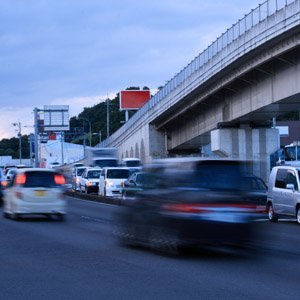
According to new research commissioned by TomTom, driving in rush hour traffic is hazardous to your health. While you may be oblivious to it, your daily commute can result in a range of symptoms.
The results of the survey indicate that driving in traffic puts drivers under huge physiological stress, with men suffering seven times more than women.
Independent tests revealed that women suffered an 8.7% increase in stress from driving in traffic, whilst men suffered a staggering increase of 60%.
More worryingly, 67% of women and 50% of men reported not feeling stressed twenty minutes after driving in traffic, when physiologically they were.
The research goes on to suggest that the effects of long-term exposure to stress chemicals include suppressed immune function, raised blood pressure and elevated blood sugar levels.
The research reveals there is a range of noticeable symptoms, although drivers may be oblivious to the effects. Physical symptoms include dizziness, breathlessness, muscular aches and even chest pains, while behavioural symptoms include agitation and erratic driving.
A recent global survey of 10,000 drivers carried out for TomTom revealed that 72% of people aged between 18 and 64 drive on a daily basis – with 92% of people commuting from home to work and 80% from home to school.
To deal with traffic-induced stress, drivers have developed a number of coping strategies to pass the time and ease the tension:
- 82% of drivers listen to music
- 21% talk to other passengers
- 38% of American drivers and 39% of Swedish drivers talk on the phone
- 14% of Dutch drivers eat food
- English speakers prefer to sing to themselves: US – 20%, UK – 19%, South Africa – 16%.
Overall, one quarter of all South African commuters spend 45 minutes or more in traffic, causing levels of fatigue, stress and demotivation to rise; employees to be late for work; and meetings to be cancelled. Even more stressful than being late for work is being late to collect children.
This research proves that traffic has a massive impact, not only on drivers, but on commerce and society in general.