
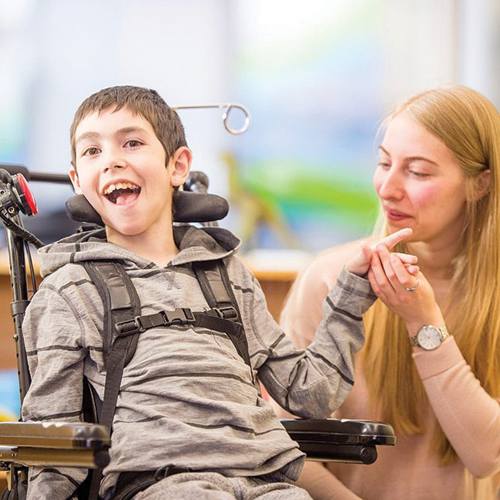
When hearing parents’ heart-wrenching complaints of “Doctor, he cries in pain when I try to put his pants on,” and “Doctor, we cannot put him in a car or take him anywhere because he is too stiff to sit,” – we felt we needed to do more to help these children,” says Dr Amith Keshave, paediatric neurologist.
These children suffer from spasticity, which is involuntary increased muscle tone. The most common cause of spasticity in children is cerebral palsy (CP). Cerebral palsy is a non-progressive insult on the motor part of the developing brain. There are other causes of spasticity such as strokes and trauma to the brain or spine.
Spasticity causes stiffness of the muscles and joints, preventing movement. Spasticity of the lower limbs can be so severe that it impairs walking, standing, sitting and is sometimes so significant that parents are unable to change a nappy or dress a child without causing unbearable pain. Spasticity of the upper limbs can cause a painfully flexed elbow, wrist or clenched fist so the child is unable to use their upper limbs.
Medical treatment of spasticity using oral medication to relax muscles is often unsatisfactory. The KZN Spasticity Clinic offers alternative treatments for spasticity. Spasticity can be treated with botulinum toxin which is produced by the bacterium Clostridium Botulinum. It is well known for its use in cosmetic procedures for lines and wrinkles. It is injected into specific muscle groups and acts by preventing muscle contraction, causing the muscle to relax.
Treating the hypertonicity in these children can result in the following benefits:
• Improve use and mobility of hands and feet
• Prevent contractures
• Improve and relieve muscle and joint pain
• Improve the ability to care for the personal hygiene of these children
• Improve posture and allow ease for transfer
• Prevent shortening and stiffness of soft tissues around a joint
• Many children with CP have excessive salivation. By injecting the salivary glands, it can markedly reduce drooling, improving personal hygiene
A multidisciplinary approach is imperative to best manage spasticity. After the injections, all patients undergo intense physiotherapy and occupational therapy to stretch the relaxed muscles and to exercise and strengthen the other muscle groups. Some patients may need casts or splints fitted to improve joint mobility.
“Unfortunately there is no cure for CP, but by managing their symptoms, we are able to improve the quality of life for these children and make it easier for caregivers to care for them,” concludes Dr Keshave.
Source: Dr Amith Keshave